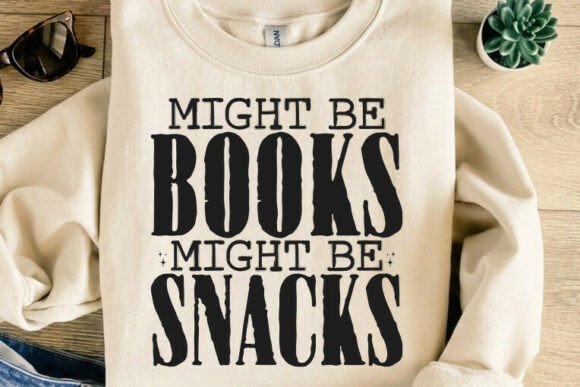
Reviewing the Books Might Be Snacks Design for Embroidery
As a designer who has spent countless hours digitizing patterns and testing them on various fabrics, I have learned that not every graphic translates well to thread. When I first encountered the Books Might Be Snacks T-Shirt Design, my initial reaction was one of cautious optimism. The phrase itself is playful, tapping into the cozy, introverted humor that resonates deeply with readers and book lovers. However, knowing that this product is marketed primarily as a set of high-resolution graphics—specifically EPS, PNG, and SVG files at 4500px and 5400px with transparent backgrounds—I needed to evaluate how this visual concept would hold up when translated into a tangible machine embroidery design.
For those of us in the craft business, whether you are an Etsy seller, a boutique owner, or a hobbyist making personalized gifts, the gap between a digital image and a stitched reality is where profits are made or lost. This review explores the practical application of this graphic in real-world embroidery projects, focusing on stitchability, fabric compatibility, and commercial viability.
First Impressions: Mood and Visual Personality
The core appeal of the Books Might Be Snacks T-Shirt Design lies in its whimsical tone. It suggests a love for literature that is almost physical, treating books with the same immediate gratification as a favorite snack. Visually, these types of designs often rely on bold typography paired with simple iconography, such as stacked books or open pages. In the context of T-Shirt Designs, this layout usually aims for immediate readability from a distance.
From a design perspective, the mood is casual and approachable. It does not scream "luxury" or "formal," which makes it ideal for everyday wearables and home goods. The personality of the graphic is friendly, making it a strong candidate for products intended to spark conversation or convey a sense of shared identity among book clubs and literary communities. However, because the source files are raster and vector graphics rather than pre-digitized embroidery files, the burden of translation falls on the creator. You must consider how the curves of the letters and the edges of any illustrative elements will convert to satin stitches or fill stitches.
Real-World Application: From Screen to Stitch
To test the viability of this concept, I imagined a specific scenario: creating a custom embroidered tote bag for a local library fundraiser. Tote bags are typically made from canvas or heavy cotton, which provides a stable base for embroidery. Using the Books Might Be Snacks T-Shirt Design as a reference, I considered how the text would look when stitched out in a contrasting thread color.
In this scenario, the design’s success depends heavily on font weight. If the original graphic uses thin, delicate lines, they may disappear into the fabric texture or break during stitching. For a tote bag, a bolder interpretation using a dense fill stitch for the larger letters and a clean satin stitch for borders would ensure durability. The humorous nature of the phrase pairs perfectly with the utilitarian vibe of a tote, turning a simple grocery carrier into a statement piece. This same logic applies to sweatshirt embroidery, where the plush texture of fleece can swallow up fine details. Here, the design needs to be simplified, ensuring that the "snacks" and "books" elements are distinct and not overly cluttered.
Another practical application is in baby embroidery. A onesie or a nursery pillow cover featuring this quote could be a hit for literary parents. However, scale is critical. On a small garment, the text must be legible without being overwhelming. This requires careful adjustment of the hoop size and stitch density to prevent the fabric from puckering, a common issue when stitching dense graphics onto stretchy knits.
Navigating Technical Challenges and Fabric Constraints
While the concept is charming, executing the Books Might Be Snacks T-Shirt Design requires technical vigilance. Since the product description specifies PNG and SVG files, you are working with images, not native embroidery formats like PES or DST. This means you cannot simply load the file into your machine. You must digitize it yourself or hire a digitizer. This step is crucial for controlling stitch direction and density.
One major concern with text-based designs is the interior of letters like 'O', 'A', or 'B'. In embroidery, these closed spaces need to be managed carefully to avoid thread bunching. If the design includes detailed illustrations of books, small corners can become problematic. Sharp corners in graphics often result in bulky knots in embroidery unless they are rounded off during the digitizing process. Additionally, if you plan to use this on dark fabric, you must account for underlay stitches to ensure the top thread colors pop. A white thread on black cotton without proper underlay can look sparse and unprofessional.
Curved surfaces, such as caps or hats, present another challenge. The Books Might Be Snacks T-Shirt Design would need to be arched or distorted slightly to fit the curvature of a cap panel. Straight lines can appear curved when stitched on a round surface, so previewing the design in a 3D mockup tool is essential before committing to the final stitch-out. Furthermore, textured fabrics like terry cloth or waffle knit require higher stitch density to bridge the gaps in the fabric weave, which can increase the risk of perforation if the needle size is not adjusted accordingly.
Enhancing Product Value and Brand Consistency
For small shop owners and creative entrepreneurs, the perceived value of a finished product is tied directly to the quality of the execution. A well-stitched version of the Books Might Be Snacks T-Shirt Design can elevate a basic t-shirt into a premium item. Customers trust handmade products that show attention to detail. Clean trim backs, consistent tension, and appropriate stabilizer use signal professionalism.
This design fits well within a broader brand strategy for shops that cater to readers, teachers, or librarians. It can be part of a cohesive collection that includes other literary quotes, creating a recognizable aesthetic. When used in printable mockups for online listings, ensure that the digital representation matches the realistic limitations of embroidery. Over-promising on detail in photos can lead to customer disappointment when the physical item arrives. Transparency about the handmade nature of the product builds long-term trust.
Practical Notes for the Embroidery Designer
Before you begin your next project with this graphic, consider these actionable steps:
- Test on Scrap Fabric: Always run a test stitch on the same type of fabric you intend to use for the final product. This reveals issues with tension and registration.
- Check Thread Contrast: Ensure your thread colors stand out against the fabric. High contrast improves readability, especially for humorous quotes.
- Review Stitch Density: Adjust density based on fabric weight. Lighter fabrics need less density to prevent puckering; heavier fabrics can handle more.
- Confirm Hoop Size: Make sure the design fits within your machine’s maximum hoop area, leaving enough margin for clamping.
- Inspect Small Details: Simplify tiny elements that may not stitch out cleanly. Sometimes less is more in embroidery.
- Use Proper Stabilizer: Choose the right stabilizer (cut-away for knits, tear-away for wovens) to support the stitches during and after washing.
- Verify Licensing: Since this is sold as a graphic file, confirm whether the creator allows commercial use of the digitized embroidery result. Many graphic licenses do not automatically grant rights for physical resale of embroidered items.
In conclusion, the Books Might Be Snacks T-Shirt Design offers a delightful premise for various embroidery projects. Its success, however, hinges on thoughtful digitizing and material selection. By respecting the technical constraints of machine embroidery and prioritizing clarity and durability, you can transform this simple graphic into a cherished handmade product that resonates with customers and stands the test of time.